Stones ·
A short guide to the stones we set
Turquoise, coral, lapis, pearl, garnet and amethyst: what they are, where they come from, and how to tell the real thing.
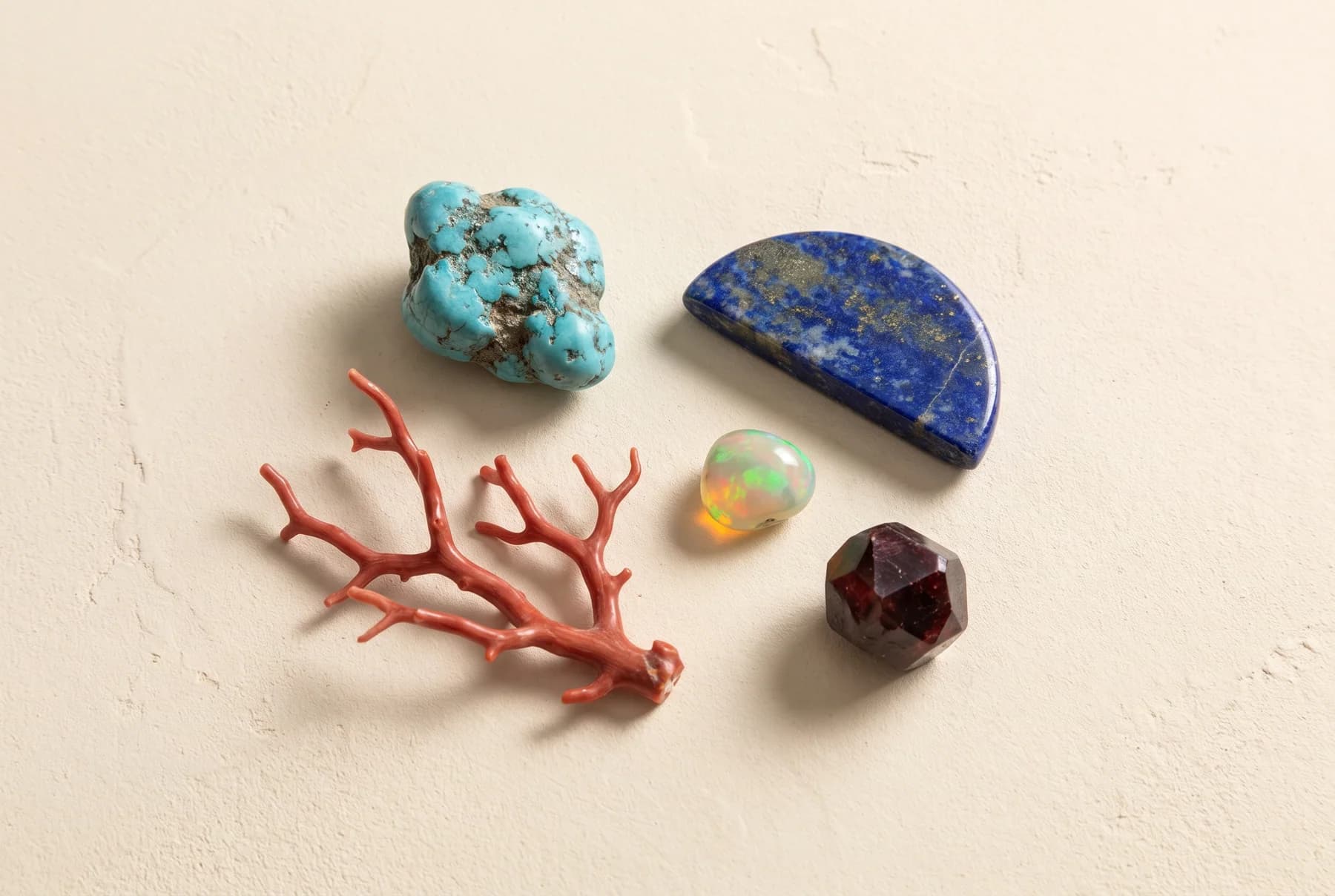
Almost every piece in the collection carries a natural stone. Here is what you are looking at.
Turquoise
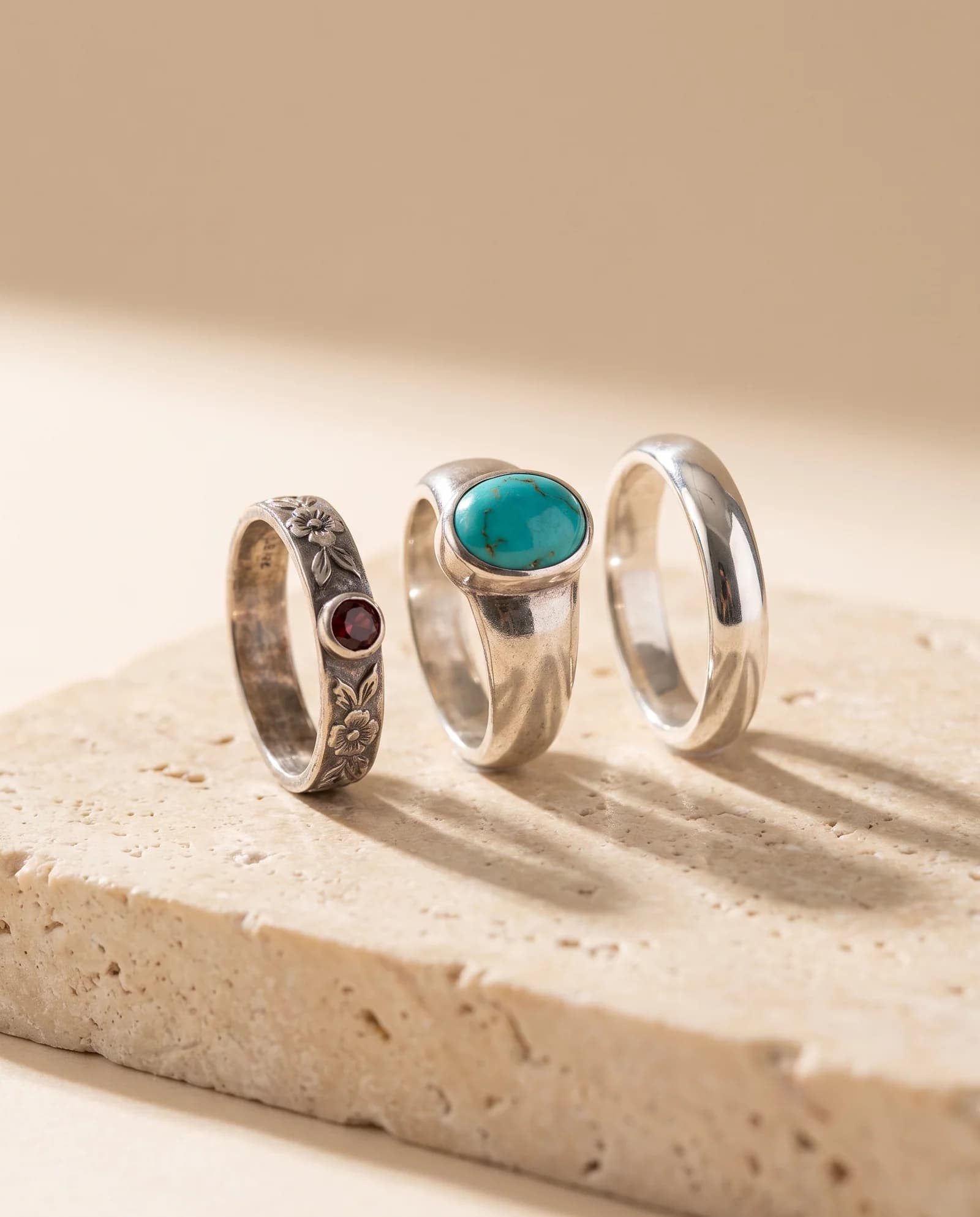
A hydrated copper phosphate that forms in dry, copper-rich ground. The colour runs from sky blue to green depending on how much iron is present, and the dark veins are the surrounding rock, called the matrix. Real turquoise is slightly porous and a little cool to the touch. It has been worn for at least five thousand years.
Coral
Mediterranean red coral and the paler angel-skin coral are the skeletons of small marine animals, polished rather than cut. Coral is soft, warm to hold and should be treated gently. We only use coral that has been in circulation for years, much of it from antique pieces.
Lapis lazuli
A rock rather than a single mineral, lapis takes its ultramarine from the mineral lazurite. The gold flecks are pyrite. The finest material still comes from Badakhshan in Afghanistan, where it has been mined since antiquity. Lapis was ground into the pigment that painted the blue robes in Renaissance altarpieces.
Pearl
Freshwater pearls are grown inside mussels, and baroque pearls are simply the ones that grew into irregular shapes. No two are alike. Their lustre comes from thousands of layers of nacre, and it is that layering which makes them feel slightly gritty against a tooth, the traditional test for a real pearl.
Garnet
A family of silicate minerals, of which the deep red pyrope and almandine are the ones you see in antique-style silver. Garnet is hard, wears well and has a warmth that suits oxidised silver particularly.
Amethyst
Quartz coloured violet by traces of iron and natural irradiation. It was once valued alongside ruby and sapphire until large deposits were found in Brazil in the nineteenth century. We like it in beads, where the colour has depth.
Every listing names the stones it carries under Materials and dimensions. If you are unsure about a stone, ask us before you buy.
Written by Andromeda. Questions? Write to us.